
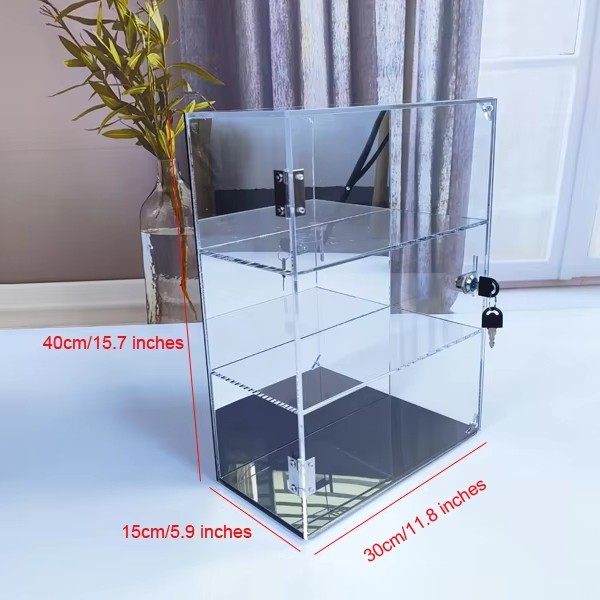
Every retailer who sells valuable, delicate, or collectible products eventually faces the same question: acrylic vs glass display case - which one should I buy? Both materials look similar at first glance, but the differences affect your shipping costs, in-store safety, product presentation, and long-term budget. This guide breaks down the eight factors that matter most, based on what we have seen in fifteen years of manufacturing both options for global retail brands.
Acrylic weighs roughly half as much as glass of the same thickness. For a countertop display case that difference seems small - until you multiply it by a 40-foot container. International buyers routinely cut fixture freight costs by 40-50% by switching from glass vitrines to clear acrylic display cases. Lower weight also means lower risk of freight damage claims.
Glass shatters into dangerous shards; acrylic cracks without fragmenting. In busy retail environments - especially stores with children, crowded aisles, or event booths - acrylic display cases eliminate the liability of glass injury. This is why museums, trade shows, and schools have almost entirely converted to acrylic showcases.
Premium cast acrylic transmits up to 92% of light - actually more than standard glass - with no green tint at the edges. A clear acrylic jewelry display case makes diamonds and gemstones sparkle noticeably more than glass equivalents. For collectibles and figures, the optical difference is immediately visible.
Glass is scratch-resistant but brittle; acrylic is impact-resistant but softer. In practice, acrylic cases that are cleaned properly (soft cloth, no ammonia-based sprays) stay optically clear for a decade of retail use. Scratches on acrylic can also be polished out - impossible with glass.
This is where acrylic wins decisively. Acrylic can be laser-cut, UV-glued, bent, engraved, and printed in ways glass cannot match. Need a 12x12x12 dustproof showcase with a colored base and your logo on the header? Acrylic does it in one process. Glass requires metal framing that adds weight, cost, and visual clutter.
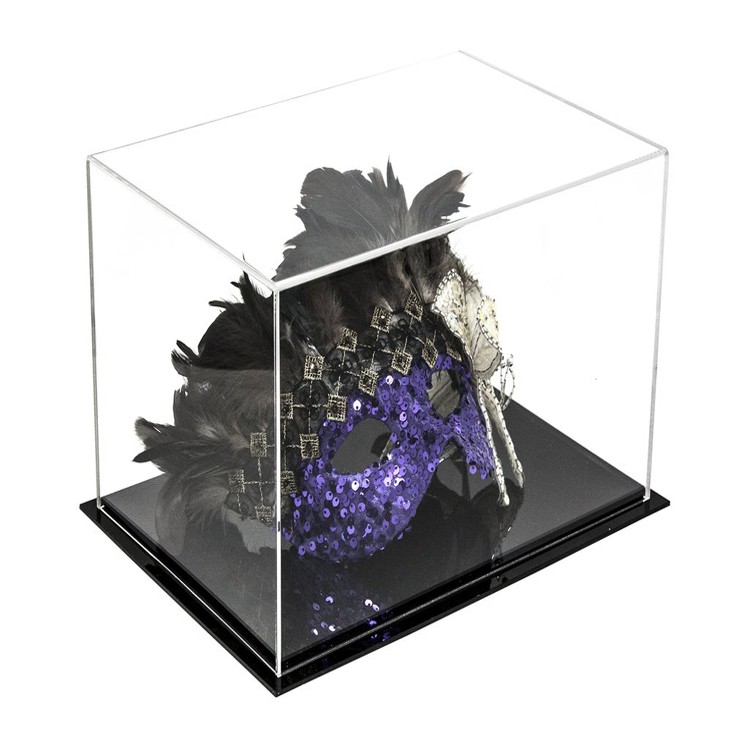
UV-glued acrylic cases are seamless - no metal frame gaps means no dust inside. Collectible retailers love that a bonded acrylic case needs no disassembly for cleaning, while framed glass vitrines accumulate grime in every corner joint.
Unit for unit, acrylic display cases typically cost 20-40% less than framed glass equivalents, and they arrive flat-packed options that slash freight further. Over a five-year horizon - including breakage replacement and shipping - acrylic is almost always the cheaper choice for growing retail chains.
Fairness matters: for fixed architectural installations, very large floor cabinets, or applications with heavy public contact at low value, glass still has a place. But for countertop displays, collectible cases, jewelry showcases, and anything that ships internationally, acrylic is the modern standard.
For 90% of retail applications, acrylic delivers better clarity, lower cost, safer handling, and unlimited customization. If you are comparing suppliers, request samples of both and hold them under store lighting - the difference sells itself. Ask our team for a free acrylic sample and quotation, or browse our full range of acrylic display boxes and cases to see what is possible.
Contact: Jim OuYang
Phone: +86-13246670384
E-mail: [email protected]
Add: #27 building, Xinyi St, Longhua District,Shenzhen China
